The Quiet Architecture of Becoming
Siraajul Murid | A visual epistemology exhibition in eleven movements. A human–AI collaboration exploring the relationship between Islamic intellectual heritage, interpretation and contemporary visual research.
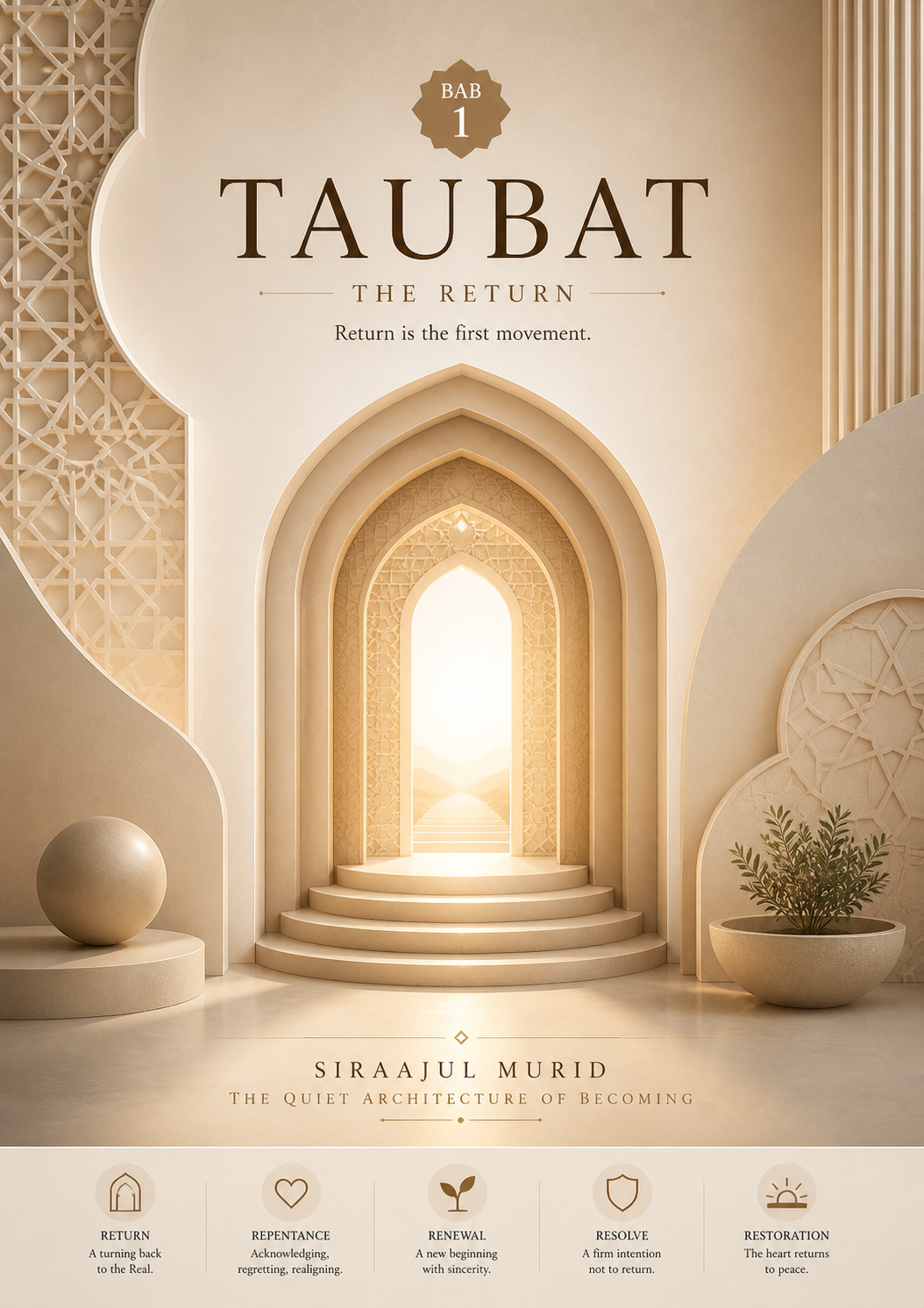
The images are contemporary creative interpretations, not facsimiles of historical illustrations. The eleven themes are a contemporary curatorial sequence, not the book’s eleven chapter headings. The 2014 edition’s actual contents begin with Taubat and Zikrullah, and subsequently address the Naqsyabandi tradition, its practices, adab and silsilah, before concluding with Qadiriyah. This exhibition should be read as an interpretive visual response, not a chapter-by-chapter representation of the book.
Explore the Eleven Movements
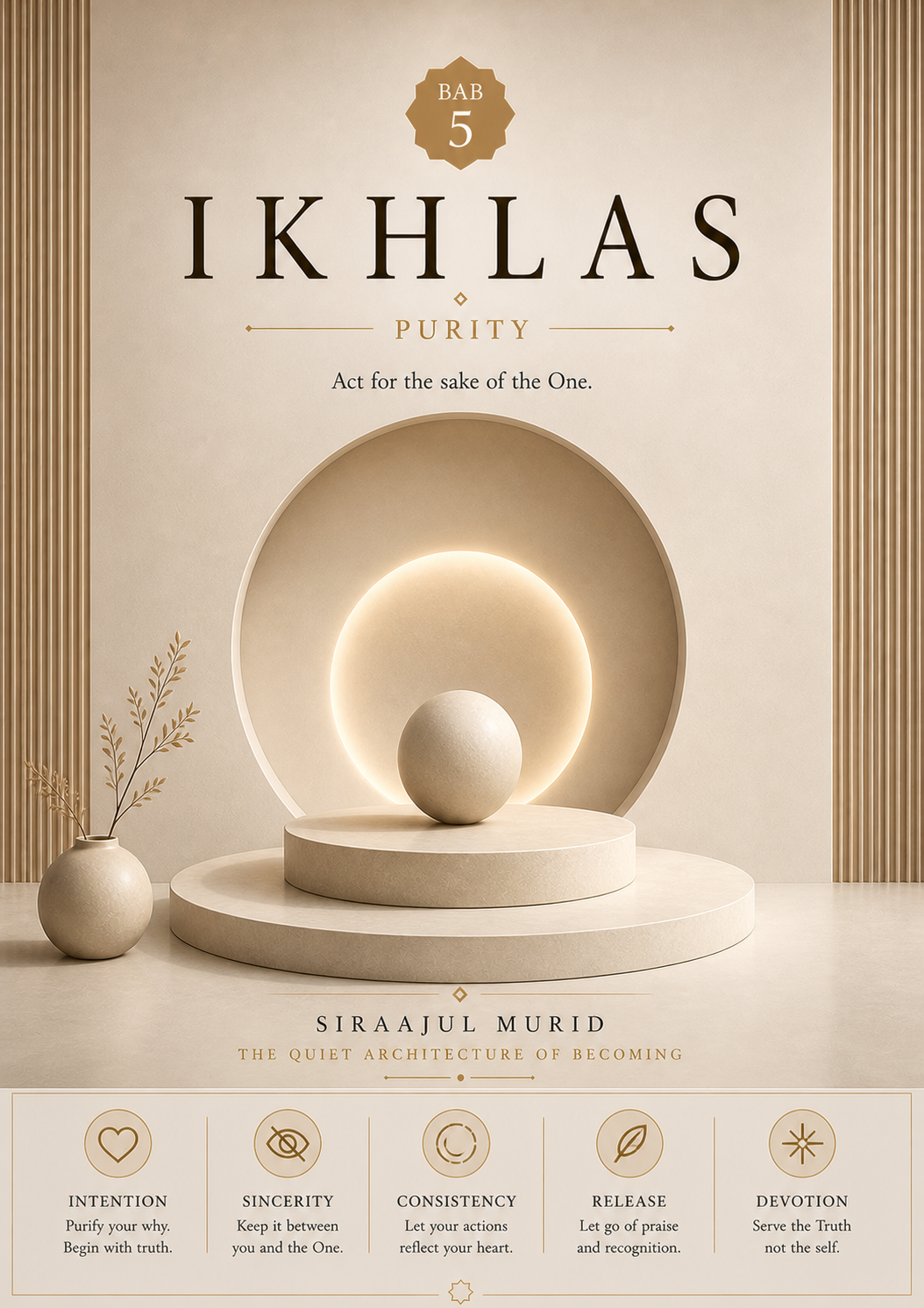
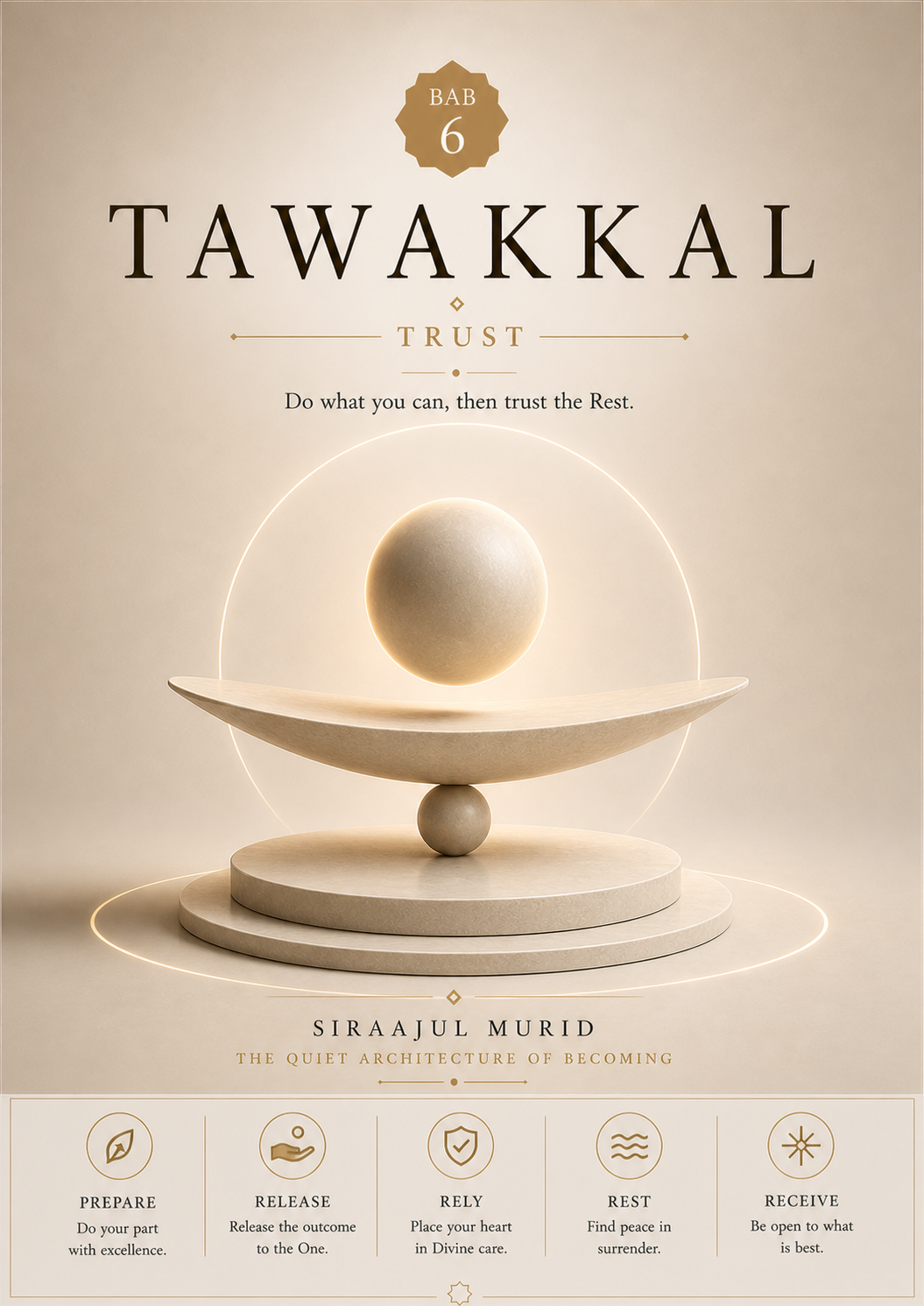
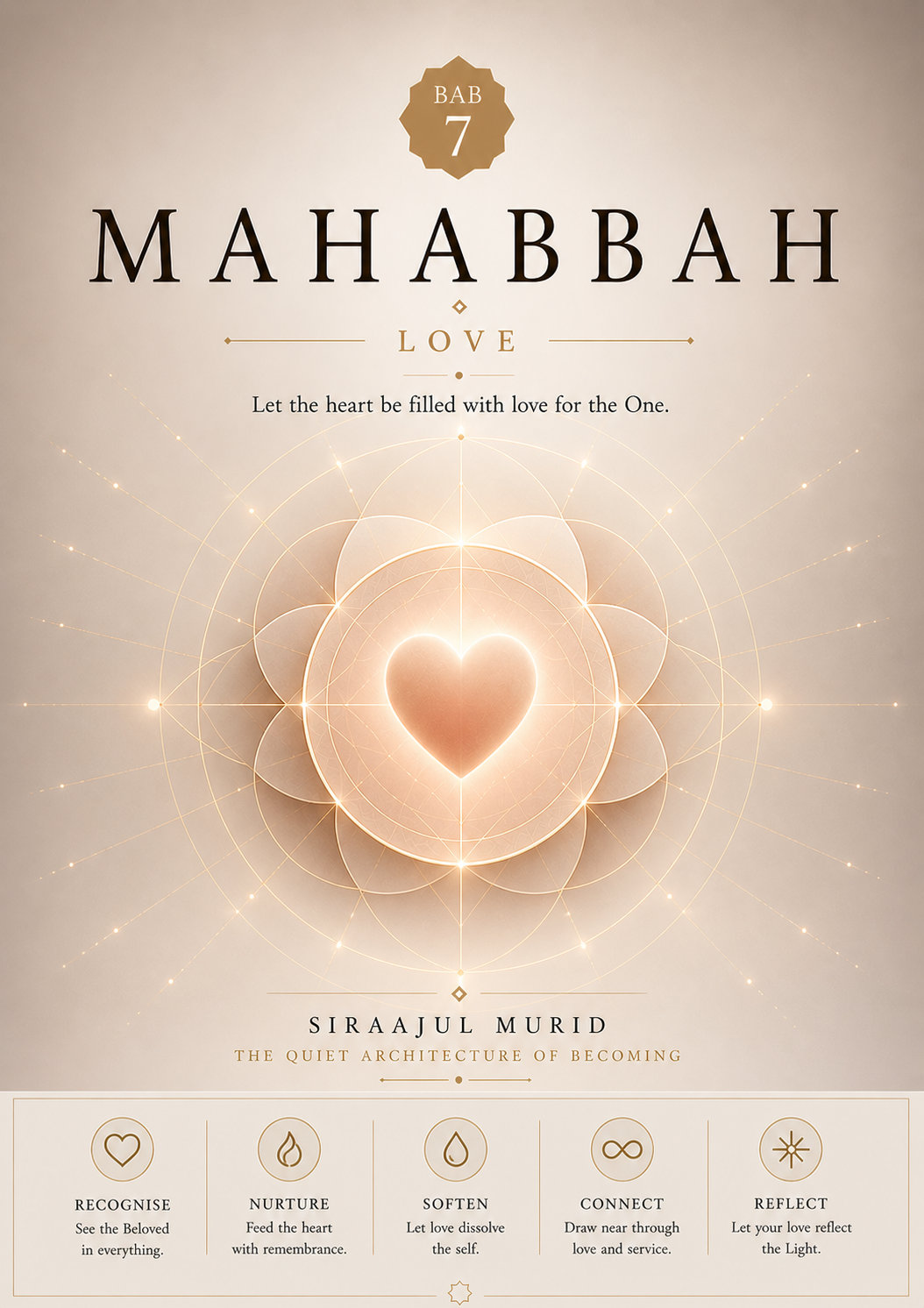
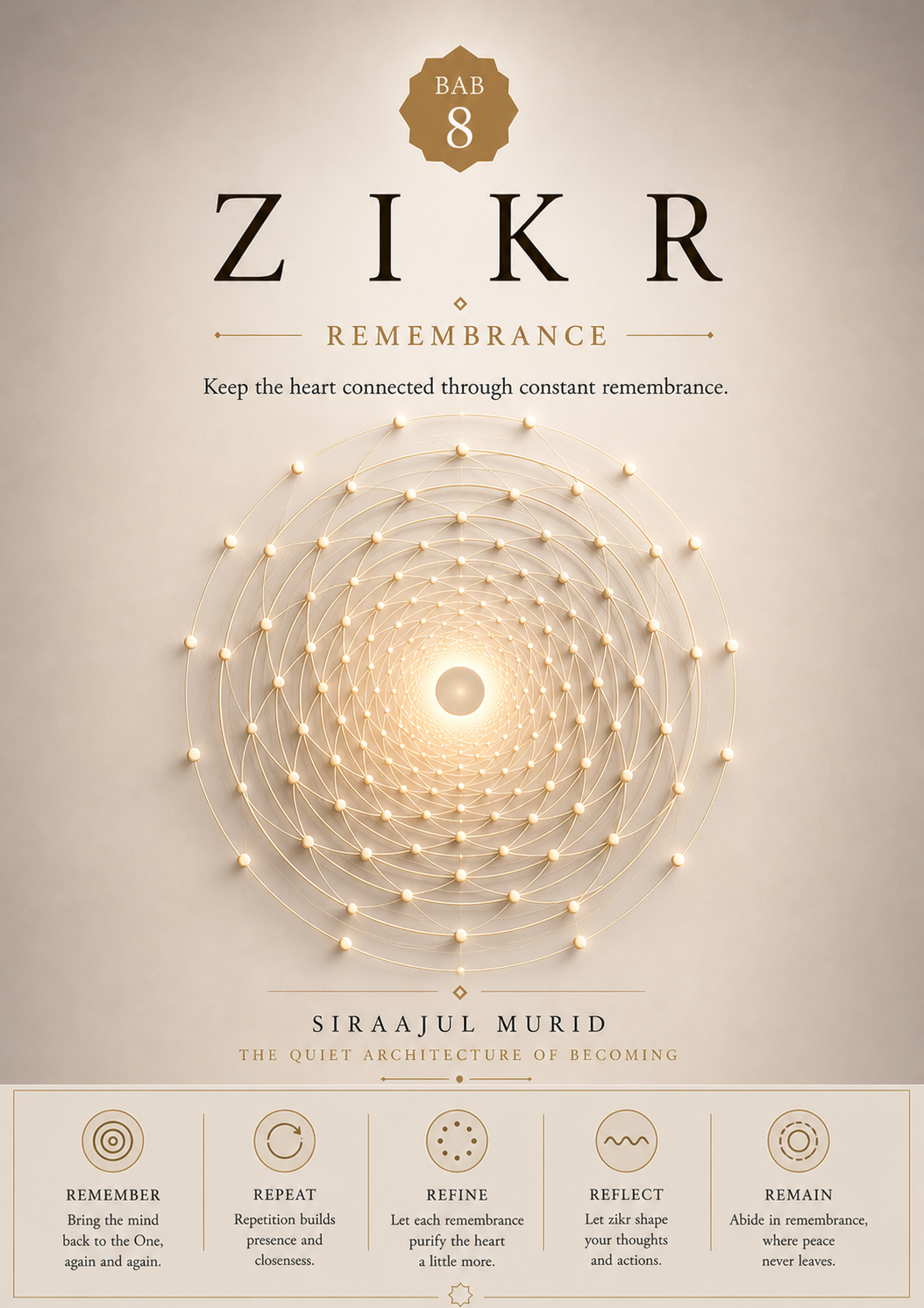
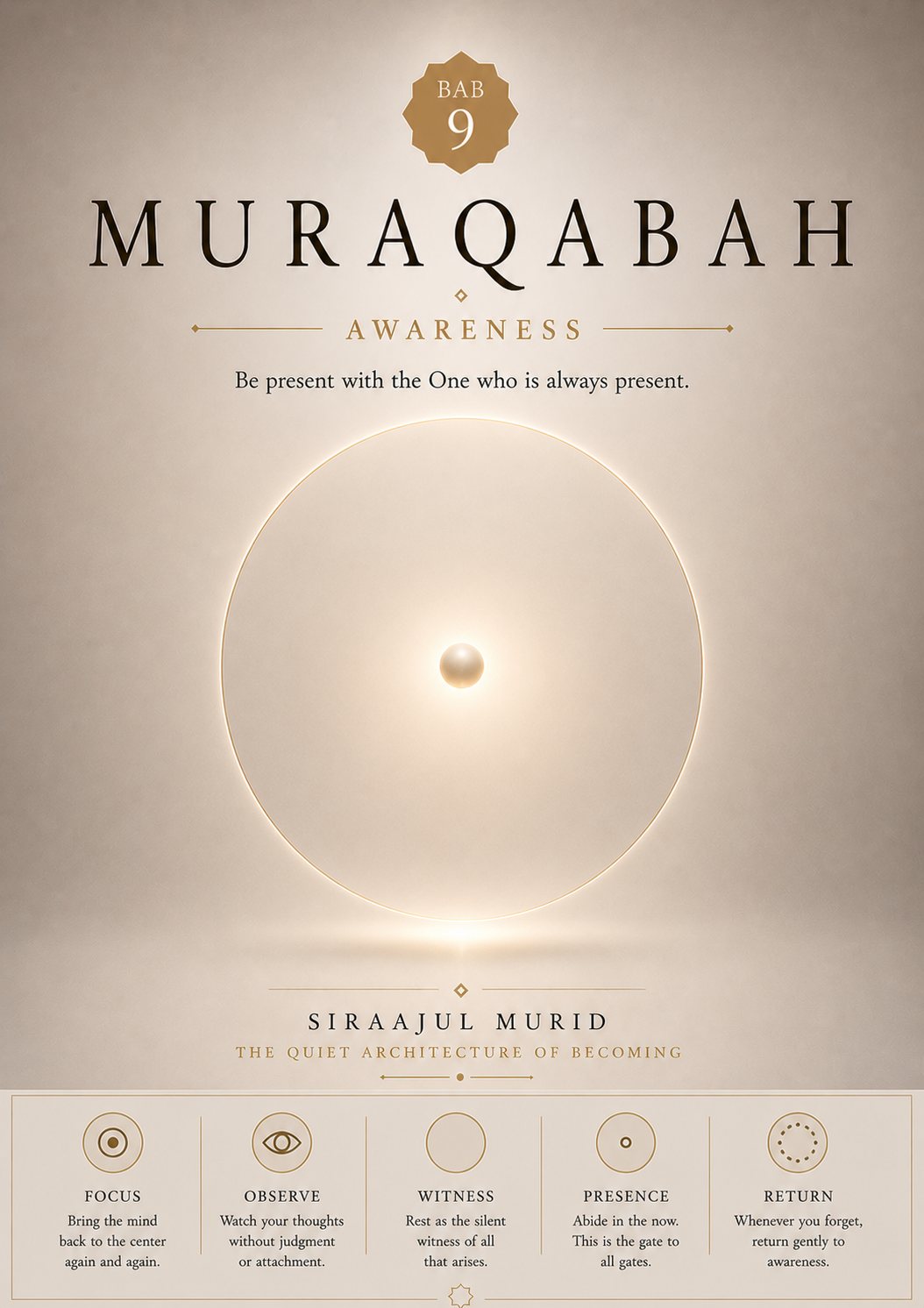
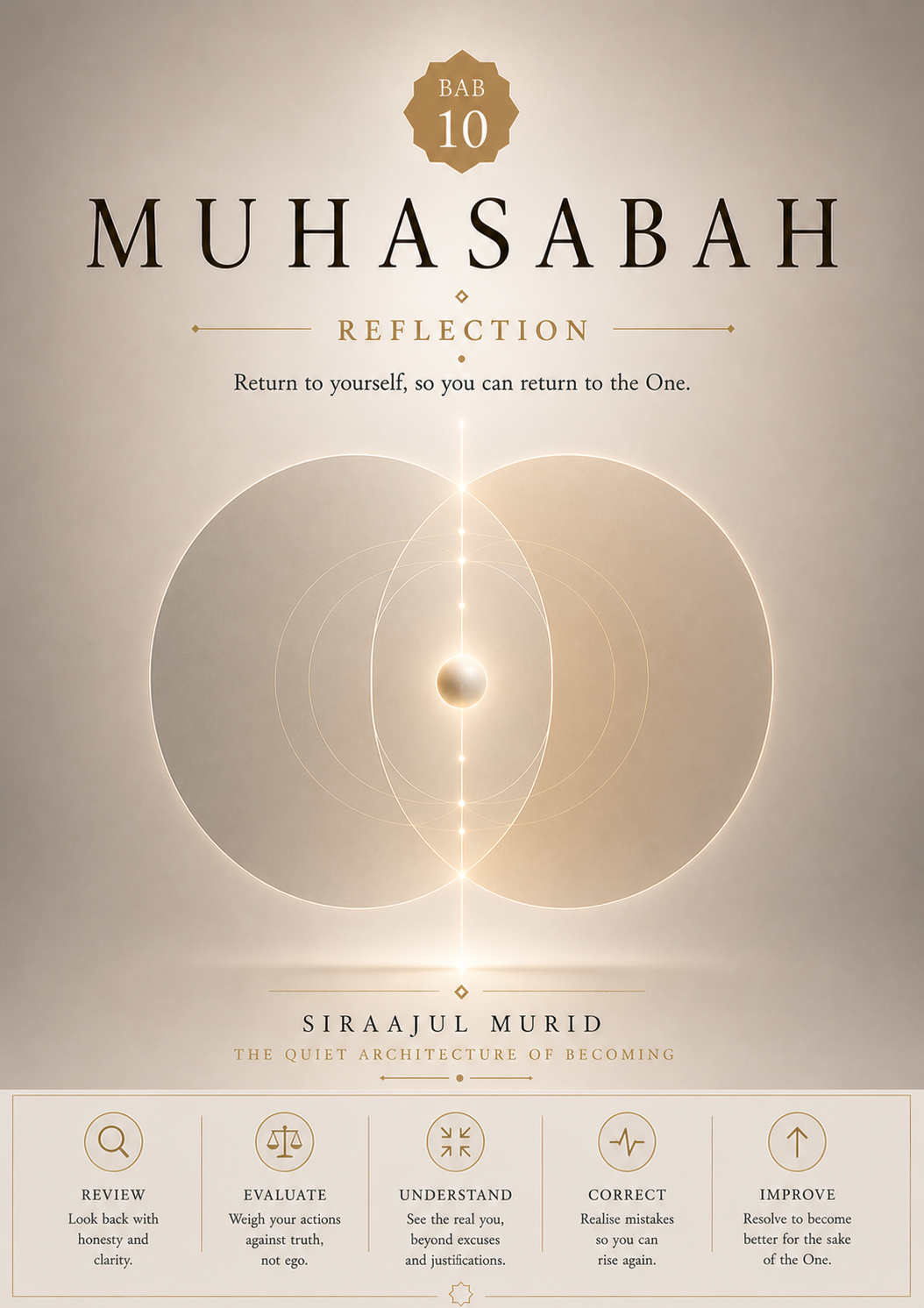
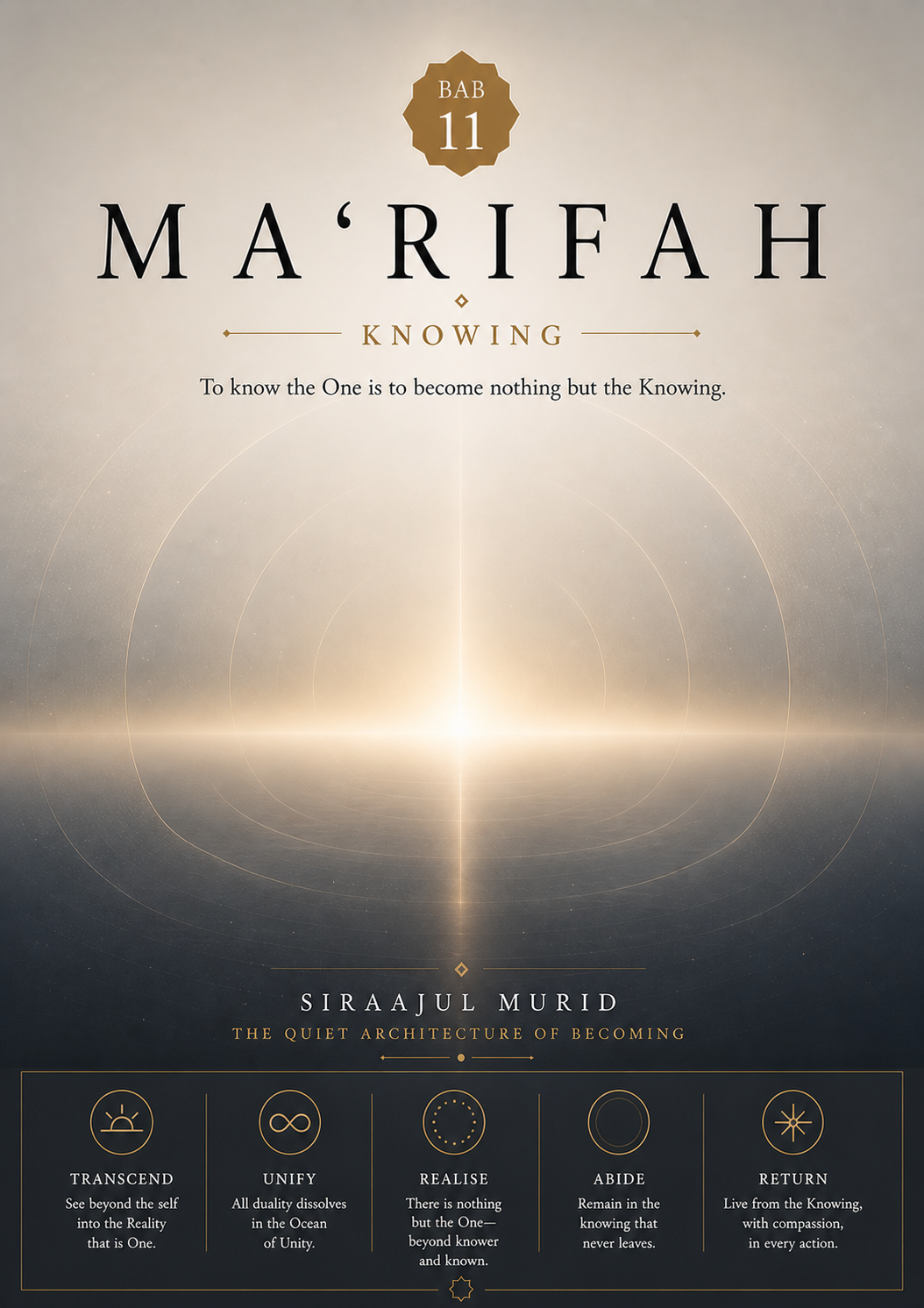
Human Research × Generative AI
This exhibition documents a collaborative process: human-led selection, contextual interpretation, design direction, critical review and editorial judgment supported by generative image-making. The artefacts are offered as research provocations, not as replacements for close reading or theological scholarship.
Research and Source Verification
Primary edition: Syeikh Anuar Al Qadri Al Khalidi. Pelita Buat Murid / Siraajul Murid. First printing, 2014. Mystiques International, Australia, Singapore and Malaysia. Copyright page: iv (PDF page 4). The edition’s original table of contents appears on pages ix–xi (PDF pages 9–11).
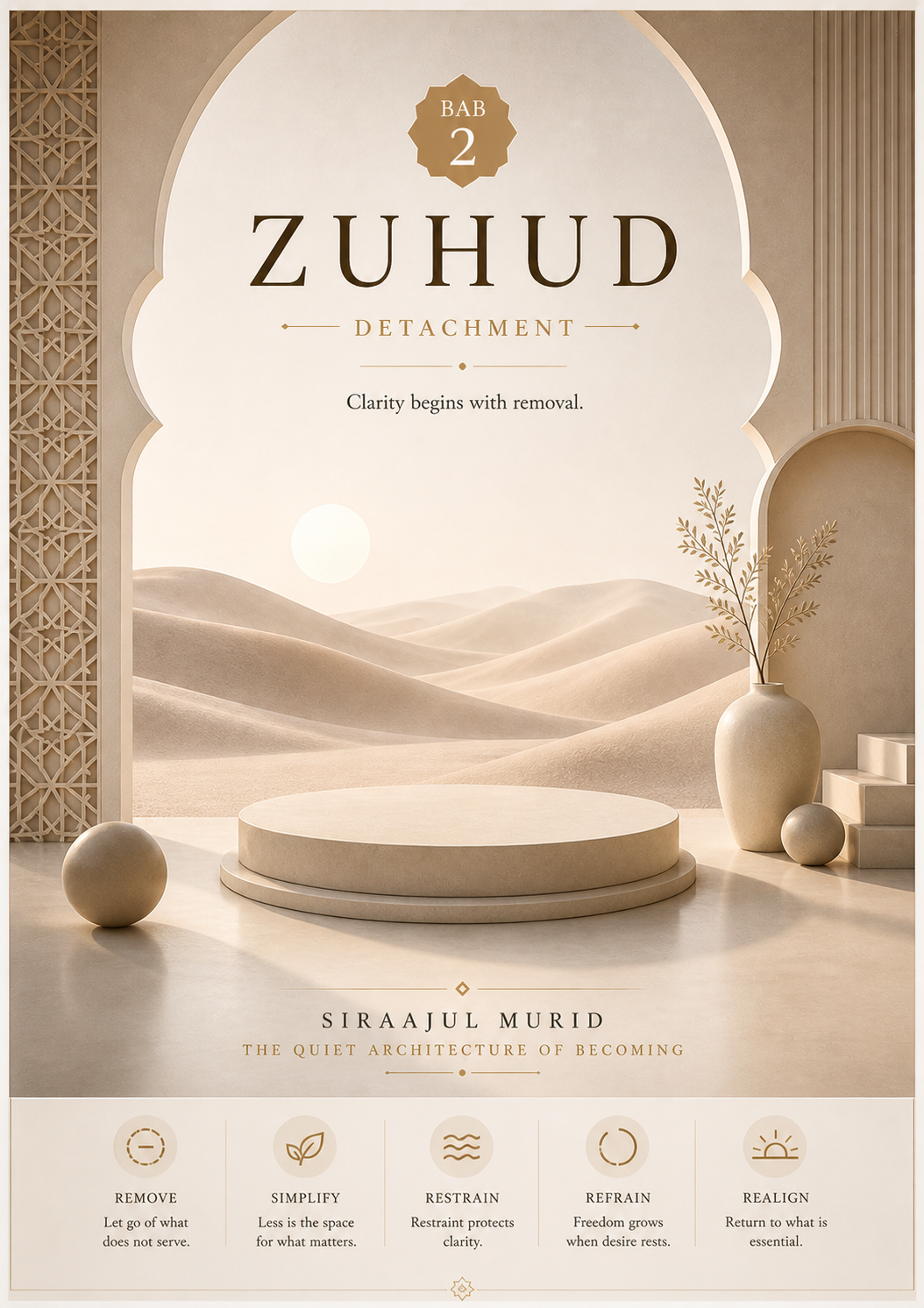
Source-supported connections: Taubat is the subject of the original Bab 1; Zikrullah is the subject of Bab 2. The discussion on printed page 245 (PDF page 267) characterises zuhud as an inward quality rather than outward clothing. Printed page 55 (PDF page 77) links zikrullah with muraqabah and ihsan. The glossary on printed page 377 (PDF page 399) defines muhasabah as self-accounting of intention and action.
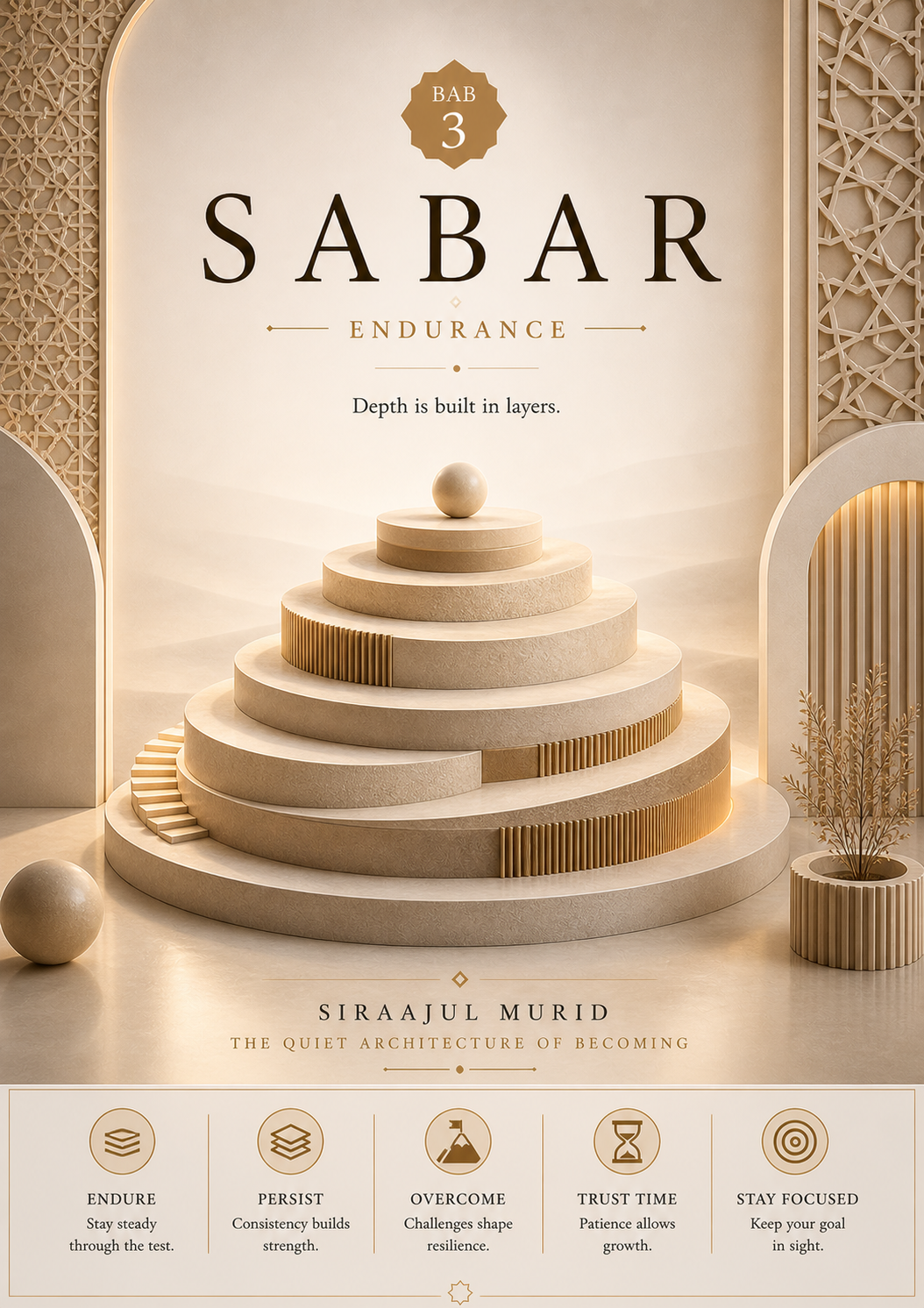
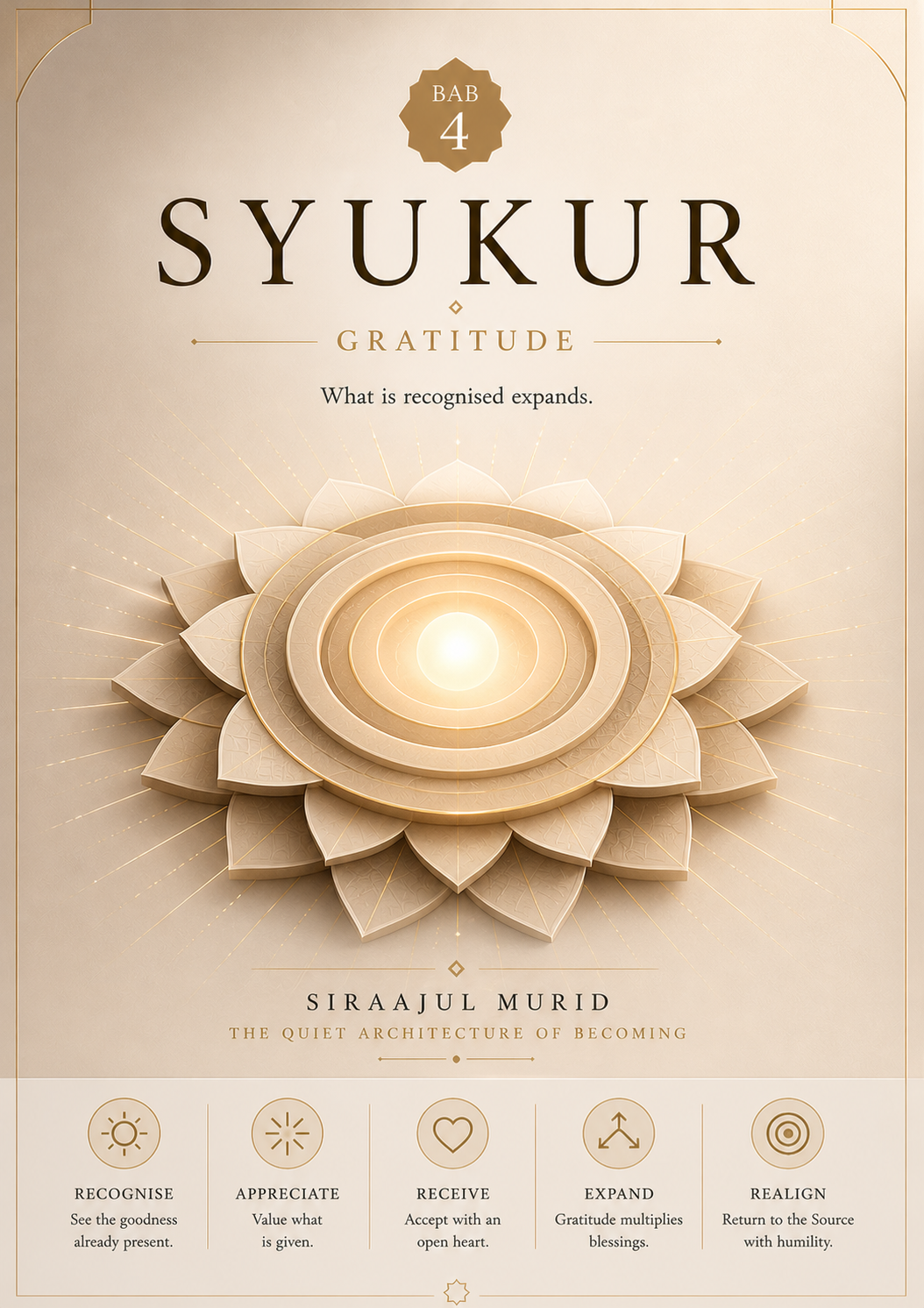
Interpretive limits: The exhibition’s eleven movements do not reproduce the source book’s chapter structure. Other themes, including sabar, syukur, ikhlas, tawakkal, mahabbah and ma’rifah, appear in the book, but the artworks and reflections are contemporary interpretations rather than direct translations or historically attributed quotations. A term’s occurrence does not establish that the exhibition’s visual metaphor originated with the author.
Editorial and research ethics: Visual artefacts were developed through human-led conceptual selection, interpretation, creative direction and review supported by generative AI. Historical or theological claims should be checked against the original Malay text and, where applicable, specialist scholarship. The source edition itself advises readers to consult experts in tasawuf and tareqah when terminology is unclear (page xiii; PDF page 13).

