The transformative journey of gaming, epitomized by forgotten titles like “Zork,” offers a fascinating insight into the evolving nature of play. Johan Huizinga (1933), in his seminal work “Homo Ludens,” posits that play is a foundational element of culture, existing outside the realms of ordinary life, enveloped in its own time and space. “Zork,” with its text-based milieu, transported players into a ‘magic circle’ – a term Huizinga used to denote the boundaries of a play-space where normal rules and realities are suspended. Within this circle, players navigated through words alone, constructing vivid worlds in their imagination, transcending the limitations of early gaming technology.
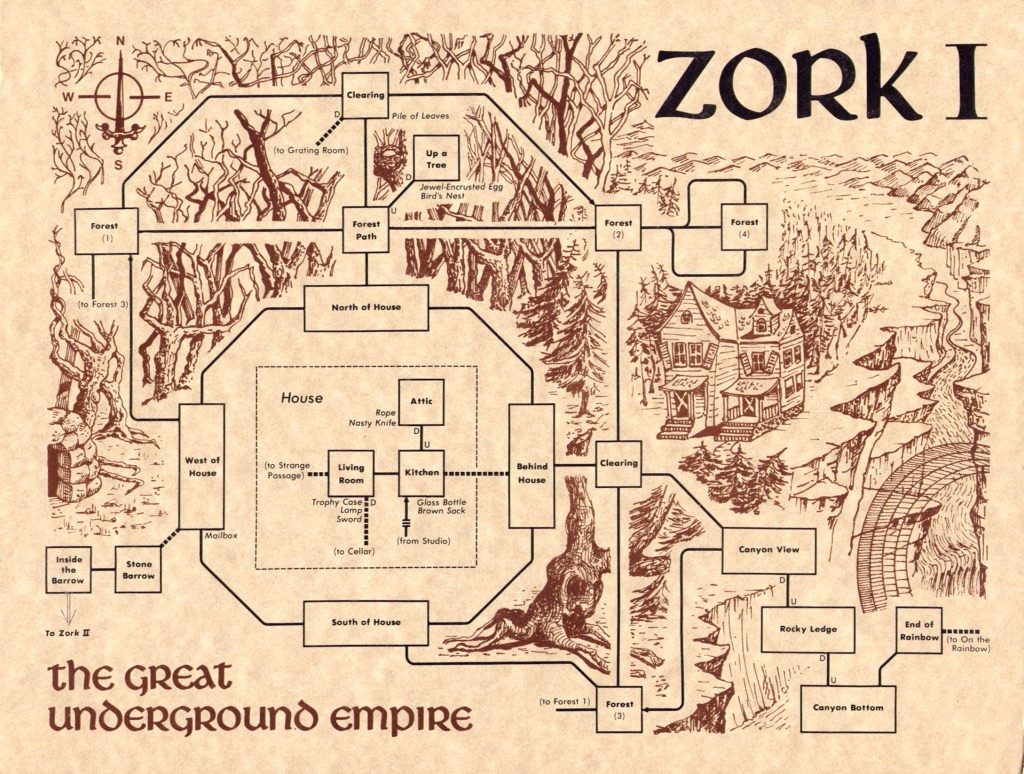
Jesper Juul (2011), in his exploration of video game theory, articulates that games are a delicate balance of rules, challenges, and player effort, leading to the negotiable consequences of winning or losing. “Zork,” despite its lack of visual graphics, masterfully embodied this balance. Its textual narrative provided both a rule-based structure and the challenge of interpreting and navigating its world, offering players a sense of achievement upon successful progression. Together, Huizinga’s and Juul’s theories encapsulate the essence of “Zork” – an emblem of a time when the boundaries of play were being explored, expanded, and celebrated in the burgeoning domain of video games.
References
Huizinga, J. (1933). Homo Ludens: A study of the play-element in culture. Routledge & Kegan Paul.
Juul, J. (2011). Half-Real: Video games between real rules and fictional worlds. MIT press.
 Visual Epistemology
Leave a comment